
Mosque Etiquette in Turkey: How to Visit Respectfully
From the outside, visiting a mosque can feel intimidating if you’re not sure what to do. In reality, most mosques in Turkey are very welcoming to visitors who come quietly and respectfully. With a little preparation, you can step inside feeling relaxed instead of worried about making a mistake.
Why visit a mosque in Turkey?
Mosques are at the heart of daily life across Turkey. In Istanbul, Cappadocia, Konya or small coastal towns, you’ll hear the call to prayer echo over rooftops five times a day. Stepping inside a mosque lets you experience the calm behind that sound: soft carpets, filtered light, and people taking a moment out of their busy routines.
Whether you’re visiting famous landmarks like the Blue Mosque in Istanbul or a small neighbourhood mosque in a village, the basic etiquette is almost the same.
Dress code: what to wear inside a mosque
Dress is the first thing to consider before you enter.
For everyone:
-
Shoulders should be covered.
-
Shorts above the knee are best avoided.
-
Clothes should not be very tight or see-through.
For women:
-
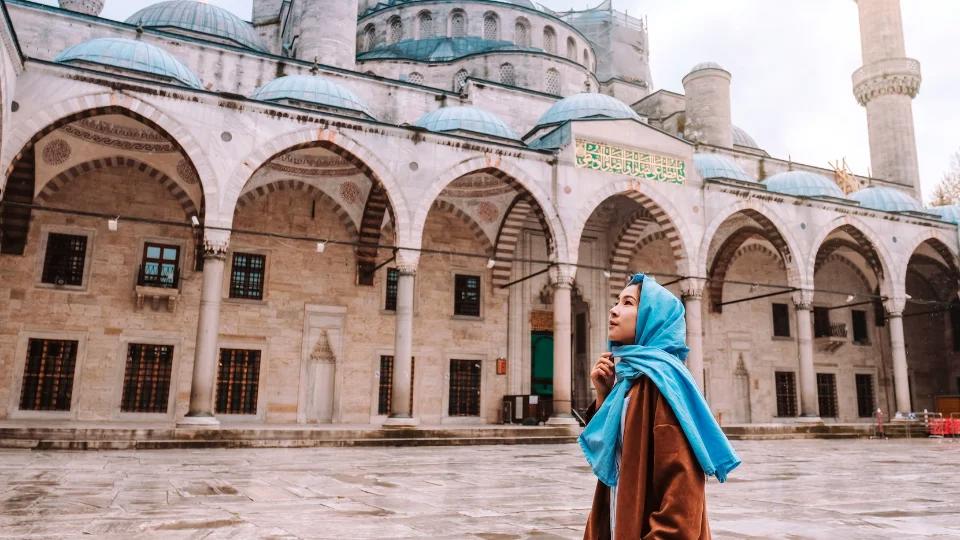
A headscarf is usually required in mosques that accept visitors. Many larger mosques provide scarves at the entrance, but bringing your own light scarf is simpler and more hygienic.
-
Tops should cover the chest, shoulders and upper arms.
-
Skirts or trousers should be at least below the knee. If you’re wearing leggings, a longer top or dress over them is more appropriate.
For men:
-
T-shirts are generally fine as long as shoulders are covered.
-
Knee-length shorts are sometimes accepted, but full-length trousers are safer, especially in more traditional cities or smaller towns.
Footwear:
-
Everyone removes shoes before stepping onto the carpets.
-
You can leave them on racks at the entrance or carry them in plastic bags provided by the mosque.
-
If you prefer, bring or wear socks so you’re not barefoot on colder days.
If you arrive and realise you’re not dressed quite right, don’t panic. Staff at major mosques are used to visitors and will gently guide you. There are often signs or attendants showing what is required.
Shoes, entrances and washing areas
Before prayer, practising Muslims perform a ritual washing called wudu, usually in dedicated washing areas or fountains outside or in a side courtyard. Visitors are not expected to do this, but it’s good to know what you’re seeing.
At the entrance:
-
Look for a door marked for visitors. Some mosques have separate doors for men and women or for worshippers and tourists.
-
Remove your shoes where you see others doing the same.
-
If you’re carrying a backpack, hold it low or in front of you so you don’t accidentally bump anyone when you turn.
Avoid blocking doorways or narrow corridors. If you’re unsure, pause for a moment and watch where people go; in most mosques, the visitor flow is very clear once you see it.
Prayer times: when to visit a mosque
Prayer times change slightly every day according to the position of the sun. It’s fine to visit between the five daily prayers, but there are moments when it’s better to stay outside.
Good times to visit:
-
Mid-morning, late afternoon and early evening between prayers.
-
Outside of Friday midday prayer (the busiest time of the week).
-
Outside of major religious holidays when mosques are especially crowded.
Times to avoid entering:
-
Right at the beginning of a prayer, when worshippers are lining up and the call to prayer has just finished.
-
During the Friday midday prayer if you’re visiting a very popular mosque with limited space.
If you’re already inside when a prayer begins, simply move to the back or side of the hall, sit or stand quietly and avoid walking in front of anyone who is praying. Once the prayer is complete and people begin to leave, you can continue your visit.
How to behave inside a mosque
Mosques are places of worship, but they are also community spaces. Some people may be praying, others reading, and a few simply resting in the calm.
Simple guidelines:
-
Keep your voice low. Whisper if you need to speak to your companion.
-
Turn your phone to silent and avoid answering calls inside.
-
Do not eat, drink or chew gum in the prayer area.
-
Couples should avoid hugging or kissing; holding hands briefly is usually fine but try to be discreet.
-
Try not to sit on steps or in doorways where you could block movement.
Children are welcome in most mosques, and it’s common to see families inside. If you bring children, explain that they should walk rather than run and speak quietly. Many will enjoy the patterns on the carpets, chandeliers and stained glass.
Photography and filming
Photography is generally allowed in mosques that accept visitors, but it’s important to be sensitive.
Do:
-
Take wide shots of the architecture, calligraphy and chandeliers.
-
Step to the side so you don’t block people entering or leaving.
-
Switch off flash, especially if people are praying.
Avoid:
-
Close-up photos of individuals who are praying or resting.
-
Taking photos of people without their permission in smaller neighbourhood mosques.
-
Loud shutter sounds or long video recordings during prayer.
If photography is not allowed in a particular mosque, there will usually be clear signs. When in doubt, ask an attendant with a smile and a simple “Photo okay?” – they’ll let you know.
Visiting famous mosques versus neighbourhood mosques
Big-name mosques in Istanbul and other cities often have visitor routes, information panels and staff specifically there to help. You may pass through security checks, small ticket offices (for attached museums) or roped-off areas reserved only for worshippers. Follow the signs and stay within visitor zones unless staff invite you elsewhere.
Neighbourhood mosques are more informal. There may be no signs in English, just an open door and a shoe rack. In these places:
-
Enter slowly and respectfully, especially if there are only a few people inside.
-
Stay towards the back unless you are familiar with the layout.
-
Limit photography or skip it altogether; sometimes the most respectful choice is simply to sit and observe quietly for a few minutes.
Both types of mosques offer something different. The famous ones impress with size and decoration; the smaller ones show how ordinary life and worship blend together.
Donations and leaving the mosque
Many mosques have donation boxes near the entrance. There is no obligation to give, but if you’ve enjoyed your visit, a small contribution towards maintenance and cleaning is appreciated.
When you’re ready to leave:
-
Collect your shoes without rushing.
-
Step outside before adjusting scarves or clothing.
-
Keep voices low until you’re well away from the main prayer hall.
If you ever feel unsure, watch what locals do for a moment or ask an attendant at the door. A smile and a simple “Merhaba” often go a long way.
Yes, most mosques in Turkey are open to visitors of all faiths. Tourists are welcome to visit outside prayer times as long as they follow the appropriate etiquette and dress respectfully. Visitors should dress modestly when entering a mosque. Women are usually expected to cover their hair, shoulders, and knees, while men should avoid wearing shorts above the knee and sleeveless shirts. Yes. It is customary to remove your shoes before entering a mosque in Turkey. Shoes are usually placed in designated shelves or carried in a small bag while inside. Yes, tourists can visit many famous mosques in Turkey, including those in major cities. However, access may be restricted during prayer times, and visitors are expected to behave respectfully. Photography is usually allowed in many mosques, but visitors should avoid using flash and should not photograph people who are praying without permission. The best time to visit a mosque is between prayer times. This allows visitors to explore the architecture and interior without disturbing worshippers. Yes, women are generally expected to cover their hair when entering a mosque. Many mosques provide scarves at the entrance for visitors who do not have one. In many mosques, visitors can enter designated sections of the prayer hall. However, they should remain quiet and respectful, especially when prayers are taking place. Most mosques in Turkey are free to visit. Donations are sometimes accepted to support the maintenance of the mosque. Visitors should dress modestly, remove their shoes, remain quiet, avoid disturbing people who are praying, and follow any instructions given by mosque staff.Frequently Asked Questions About Mosque Etiquette in Turkey
Can non-Muslims visit mosques in Turkey?
What should I wear when visiting a mosque in Turkey?
Do I need to remove my shoes when entering a mosque?
Are tourists allowed inside famous mosques like the Blue Mosque?
Can I take photos inside a mosque?
When is the best time to visit a mosque in Turkey?
Do women have to wear a headscarf in Turkish mosques?
Can visitors enter the prayer area inside a mosque?
Is there an entrance fee to visit mosques in Turkey?
What are the basic rules of mosque etiquette in Turkey?